วันพฤหัสบดีที่ 22 กรกฎาคม พ.ศ. 2553

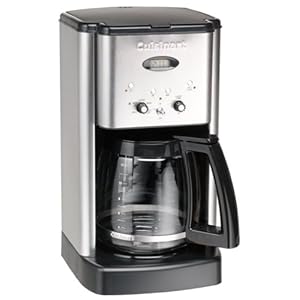
Cuisinart DCC-1200 12-Cup Brew Central Coffeemaker Reviews


Cuisinart Brew Central DCC-1200 12-Cup Coffee Make...

วันพฤหัสบดีที่ 8 กรกฎาคม พ.ศ. 2553

Canon EOS Rebel T1i 15.1 MP

Summary

Time for your head to start spinning: In September 2008, Nikon introduced the $999 12.3MP D90, the first DSLR with HD video recording. Canon quickly followed with the $2,699 21.1MP EOS 5D Mark II, which captured 1080p video instead of the 720p of arch rival Nikon. But close to $3,000 is pretty steep for a camera in the midst of a recession, so the 5D didn’t dampen the appeal of the D90. With the new EOS Rebel T1i, Canon is aiming straight for cash-strapped photographers and Nikon’s jugular with a 15.1-megapixel DSLR that records 1080p movies for hundreds less than a D90 kit with lens – all in the space of six months. Who says Moore’s Law doesn’t affect everything with a chip inside? Now, is the new T1i the killer DSLR it appears to be? We put it through its paces to find out.

Canon EOS Rebel T1iFeatures and Design

Anyone familiar with digital single lens reflex cameras, and Canons in particular, should feel very comfortable looking at the T1i, even a little bored. It has the typical all-black body and bulky SLR shape. Granted, there are a few variations in the control layout, but this is a pretty standard issue. It measures 5.1 inches wide, 3.8 inches tall, 2.4 inches deep and weighs close to 26 ounces with the kit lens. These measurements – and looks – are practically identical to the older-but-still-available Rebel XSi, a 12.2MP model that costs $749 for the kit, but does not have HD video.

The front of the T1i is dominated by the Canon lens mount, which accepts all EF and EF-S glass, offering over 60 lenses to choose from. The camera is available with a 3x 18-55mm image-stabilized lens just like affordable Nikon DSLRs. If you’re a first-timer, definitely buy the kit. Also, there are lens-release and depth-of-field preview buttons, an autofocus assist lamp, as well as Canon EOS Rebel T1i logos which are pretty sedate (thank goodness). You’ll also find the flash open button and a tiny 4-pinhole mic that records mono sound for HD movies.

On the top, you’ll find the auto pop-up flash, hot shoe for optional flashes, the main mode dial with a silver finish and power switch. There’s a dedicated button for changing ISO, which has a basic range of 100 to 3200, but has special settings for 6400 and 12,800. We’ll see how “noise-free” these options are in the performance section. The comfortable pistol grip has a dial to move through onscreen menus and the shutter button.

The mode dial is fairly standard, with all the basic settings you’ll typically use, ranging from auto, scene modes, aperture- and shutter-priority, full manual, and so on. The standout is the movie icon, a familiar option found on point-and-shoot digicams now making its way into DSLRs. We set it to 1920 x 1080 Full HD.

Canon EOS Rebel T1i

The rear has a very good 3-inch LCD rated 920K pixels, which is a real plus when focusing during Live View, since you’re framing your subjects on the bigger screen rather than the viewfinder. To accommodate the screen, all of the buttons are either above it, or to the right. Again, no surprises here, other than a button that starts video recording when you’re in movie mode. This button gets you into Live View in still mode. Like every DSLR, the T1i has a viewfinder with diopter control. The viewfinder has 95% coverage with .87x magnification, very typical specs for mid-range models.

On the right side is a compartment for SD and SDHC cards, while on the left are the mini HDMI and USB outputs, and a remote control terminal. The bottom of this Made-In-Japan camera has a metal tripod mount and battery compartment.

What’s in the Box

If you purchase the kit, you’ll get the camera body, lens, strap, battery, charger, USB and A/V cables. There’s no mini-HDMI cable, so make sure you put that on your list. It comes with a 228-page owner’s manual, a more reasonably-sized pocket guide that’s much easier to tote around, and an EOS Digital Solution Disk. This containsDigital Photo Professional for developing RAW files, Canon’s ZoomBrowser EX for handling images, EOS Utility,PhotoStitch and Picture Style Editor for PC, with similar software for Mac. There are also CD-ROMs with software instruction manuals, and two printed how-to brochures for enhancing your shooting skills.

Once we popped in the battery and a 2GB Class 6 SD card, it was time to start capturing stills and HD videos.

Canon EOS Rebel T1iPerformance and Use

Full HD video is the highlight of this DSLR, but it is first and foremost a camera, so we initially checked out its still image chops. The Rebel T1i has a 15.1-megapixel APS-C CMOS sensor, so it captures 4752 by 3168 pixel files. Since it cranks out 3.4 frames per second in burst mode, a hefty high-speed Class 6 card is a must,especially if you’re shooting full HD clips. An aside: The 12.2MP XSi shoots at 3.5 fps, so even with the increased resolution, Canon maintained the speed. The new DIGIC 4 processor keeps things moving at a brisk pace. The 15.1MP $1,199 EOS 50D also uses this chip, but this larger, sturdier camera grabs 6.3 fps. It doesn’t take videos, however.

We started off in full auto, with major parameters (ISO, white balance) also set to auto and used the standard picture style, which is the default. Burst mode was engaged, and image quality was set initially to JPEG, then RAW+JPEG. From auto we literally spun the mode dial and used the myriad manual options.

Beginners and experienced shutterbugs will have no problems using the T1i. It has a nice feel, and controls are logically positioned. It does feel a bit light to our experienced hands, but most people won’t care, and will probably appreciate it. By comparison, a 50D weighs 26 ounces without a lens, while the T1i is the same weight with it. Focusing in still mode is very quick and accurate, thanks to a nine-point autofocus system (one-cross type). The burst mode was as speedy as advertised, and you should have no problems capturing your favorite little athlete in action; a longer zoom will help in those instances.

The T1i hits 6400 and 12,800 ISO, but it’s not worth the trouble. We took a number of test shots ranging from minimum ISO to max, then made prints and examined them closely on the monitor. Images were practically noise-free up to 400, then artifacts appeared at 800, but images were still very usable. Even images at 1600 weren’t the pixilated mess we expected – that arrived at 3200, so you can imagine what 6400 and 12,800 looked like. Such is life, but there are greater tragedies in this world. As for prints of more normal subjects, such as blooming spring foliage and people in daylight, the T1i did a fine job with accurate colors, keeping the overall tone we appreciate with Canon cameras.

Canon EOS Rebel T1i

Then it was time to go Hollywood. Using the movie mode is simple: Just turn the mode dial to movie, press the Live View button next to the LCD, and you’re in business. The T1i records 1920 x 1080 at 20 frames per second. At best levels, a 4GB card holds 12 minutes of footage, not quite the 14 hours of the Sony XR500V camcorder. In other words, if you want to shoot a lot of high-quality HD video, a camcorder is still the way to go. And let’s not forget, camcorders have a thing called autofocus for moving subjects, something DSLRs like the T1i do not. Yes, focusing a stationary object with the T1i is easy (just hit the AE/AF button), but once your target moves, you have to constantly keep focusing manually with the lens ring. Keeping this all together is a trick that takes practice to master. Another issue: 20 fps is not a winning number, as the QuickTime videos are quite jerky when we reviewed them on a 50-inch plasma via HDMI. To get the more fluid 30 fps, you have to drop to 720p, which is decent, but not great footage.

Conclusion

The Canon EOS Rebel T1i is a solid mid-range DSLR with the added spice of HD video recording. We have no squawks on the camera section, other than noise becoming readily apparent beyond ISO 800. It’s responsive, and you’ll be more than happy with the prints, whether you making 4×6s or 13×19s. The HD videos are a mixed bag, with decent full HD results, but nothing you’d compare with a top-flight camcorder such as the Canon HF S10 or Sony XR500V. Having this capability is good, but look at it as a bonus, rather than the raison d’être for a purchase. As for those weighing the pros and cons of the T1i versus the Nikon D90, we lean heavily to the Canon, especially for the price.

Pros:

  • High-quality 15.1MP stills
  • Takes full HD videos
  • Excellent 3-inch LCD
  • Noise under control up to ISO 800
  • Live View mode works well

Cons:

  • Shooting in-focus videos takes work
  • Boring design
  • Only shoots 20 fps at full HD, not 30
  • Not as rugged as more expensive DSLRs

วันพุธที่ 30 มิถุนายน พ.ศ. 2553

Canon unveils EOS 500D / Rebel T1i DSLR

Canon has unveiled the EOS 500D (Digital Rebel T1i), the latest addition to its compact DSLR series. The upper-entry-level camera features a 15.1 MP APS-C CMOS sensor with 1080p HD video recording at 20fps. It also offers a 3.0 inch LCD with 920,000 dot resolution and an ISO sensitivity range expandable up to 12800 equivalent. It includes a faster Digic 4 processor offering better noise reduction at higher ISO's and continuous shooting speeds of up to 3.4 fps delivering 170 large JPEG images in a single burst.

Jump to:

Press Release:

Amstelveen, The Netherlands, 25 March 2009: Canon announces the new 15.1MP EOS 500D which offers photographers an outstanding combination of features. Following the launch of the first Canon EOS camera to shoot movies – the EOS 5D Mark II in September 2008 – Canon now brings Full High Definition (HD) video capability to consumers in a compact and lightweight DSLR.

The new EOS 500D features a 15.1 Megapixel APS-C CMOS sensor – ideal for large detailed prints or enormous cropping possibilities. For shooting in near-dark conditions, the EOS 500D offers a high ISO sensitivity up to 3200 which is expandable to 12800, giving photographers the power to shoot in the dimmest light conditions. Outstanding noise reduction is made possible by Canon’s DIGIC 4 processor.

The EOS 500D heralds a new way for photography enthusiasts to capture their world. It pairs outstanding still image capture with Full HD 1080P video recording. For longer video shoots, users can also choose lower shooting resolutions of 720P or VGA.*

Every detail revealed
Exacting image preview and review is provided by a 3.0” Clear View LCD screen.The same screen as used on the acclaimed 5D Mark II, it features a 920,000 dot count – for ultra-detailed image review, accurate focus checks, and clear access to the EOS menu system. As well as aiding shooting from awkward angles, Live View mode includes contrast based and Face Detection AF options. Ideal for newcomers to digital SLR photography, these allow compact-camera style auto focus, with a real-time image displayed on the LCD.

Fast processing, fast focusing
Canon’s DIGIC 4 processor drives continuous shooting speeds of up to 3.4 fps in bursts of up to 170 JPEGs**. Using Canon’s wide area AF system – which features 9 individual sensors, including a central cross type point with a high precision sensor for f/2.8 or faster lenses– makes capturing split-second action sequences possible.

DIGIC 4 works in conjunction with the CMOS sensor to deliver exceptional noise reduction and 14-bit image processing for smooth gradation of tones and natural-looking colours. In addition, DIGIC 4 enables the ultra-fast start-up times and near-instant image review after shooting that photographers demand.

Distinctive EOS quality

Despite its compact, lightweight body, the EOS 500D includes all the hallmarks of the EOS system. Every detail of the EOS 500D – from the large, bright viewfinder to the famously intuitive EOS menu system – is designed to provide users with a world-class shooting experience.

Image quality is protected by the EOS Integrated Cleaning System, which reduces, repels and removes unwanted dust from the sensor. Stubborn particles can be easily removed in post-production by using Dust Delete Data – which can be added to the image in-camera – and Canon’s included Digital Photo Professional software.

Digital Photo Professional software offers a comprehensive RAW editing package, with functions such as a quick check tool, a cropping tool, and a stamp tool – plus the ability to change brightness, White Balance and Picture Styles in RAW images. The software suite is included with EOS Utility and Picture Style editor for unrivalled versatility.

Compatibility with the full range of Canon’s EF and EF-S lenses and EX-series Speedlites – including the exceptionally compact, powerful new Speedlite 270EX, which features a bounce and zoom head, plus fast recharging from just 2 AA sized

batteries – allows the creation of a shooting system as unique as the photographer using it.
“The EOS 500D pushes the boundaries of what photographers can demand from their cameras, combining exceptional images with full HD video,” said Rainer Fuehres, Head of Canon Consumer Imaging, Europe. “Photography enthusiasts can now capture their most significant moments in a manner that matches their creativity.”

Any Canon photographer can register for the CANON iMAGE GATEWAY service, which allows access to the latest EOS information, useful updates and exclusive EOS content – plus tools that allow users to create their own video podcasts and store images online.

Features at a glance:

  • 15.1 Megapixel APS-C CMOS sensor
  • Full HD movie recording with HDMI connection for viewing and playback on an HDTV
  • ISO 100-3200 (expandable to 12800)
  • 3.4 frames per second continuous shooting
  • Max. 170 large JPEG images in a single burst
  • 3.0” ClearView LCD with Live View mode
  • 9-point wide area AF with cross type centre point
  • High speed DIGIC 4 performance and superb image quality
  • EOS Integrated Cleaning System
  • Full compatibility with Canon EF and EF-S lenses and EX-series Speedlites, including new Speedlite 270EX, TS-E 17mm f/4L and TS-E 24mm f/3.5L II

Technologies Explained:

CMOS
Canon’s CMOS technology is one of the company’s key competitive advantages, with noise reduction circuitry at each pixel site delivering virtually noise-free images. In comparison with CCD technology, the lower power consumption characteristics of Canon’s CMOS sensors also contribute to longer battery life.

Signal conversion in Canon’s CMOS sensors is handled by individual amplifiers at each pixel site. Unnecessary charge transfer operations are avoided, vastly speeding up the process of getting signal to the image processor. Noise generation is reduced, power consumption is limited and faster frame rate potential is increased.

DIGIC
Image data captured by the CMOS sensor is processed by Canon’s purpose-built DIGIC image processors before being written to the camera's memory card. DIGIC technology uses advanced image processing algorithms to ensure precise, natural colours, accurate white balance, and advanced noise reduction. Ultra-fast processing speeds result in highly responsive camera operation and near-instant start-up times.

DIGIC chips work with a high speed image buffer – reading, processing, compressing and writing image data fast enough to keep the buffer clear during long continuous shooting bursts. And because DIGIC integrates all key processing functions, power consumption is kept to a minimum.

EOS Integrated Cleaning System
The EOS Integrated Cleaning System combats sensor dust in three important ways: Reduce, Repel and Remove.

  • Reduce - Internal camera mechanisms are designed to minimise dust generation. The redesigned body cap prevents dust generation through wear on the cap itself.
  • Repel - Anti-static technologies, including a special fluorine coating, are applied to the low-pass filter covering the front of the sensor so as not to attract dust.
  • Remove - A Self-Cleaning Sensor Unit uses hi-frequency vibrations to shake dust from the infrared filter for a period of approximately one second after each start up. For instant shooting after power up, this feature is disabled immediately the shutter release is depressed.

Canon has also developed an internal Dust Delete Data system, which can map the position of visible dust on the sensor. This can then be deleted automatically after the shoot with the latest Digital Photo Professional software.

Clear View LCD
Canon’s Clear View LCD screens are 3.0” in diameter and feature a VGA (640x480) pixel resolution with 920,000 dots. This allows high-quality viewing of images and ultra-accurate focus checks in playback. Thanks to a wide 170º angle-of-view, a Clear View LCD can be viewed in a wide range of environments with ghosting and reflections being eliminated thanks to Canon’s unique dual layer anti reflective coating. This combination of features enables photographers to enjoy shooting from awkward angles.

Full HD

Thanks to the combination of a Canon CMOS sensor and DIGIC 4 processing, Canon is able to offer Full HD resolution movie recording in a digital SLR camera. An HDMI connection provides the ability to play back movies directly on any HDTV in high quality HD resolution. Canon’s Full HD products feature the same maximum resolution available for HDTV’s (1920x1080 pixels), ensuring outstanding clarity. Full HD exceeds the quality found in HD ready (720) resolution devices.

Picture Style
Picture Style pre-sets simplify in-camera control over image qualities. Picture Style pre-sets can be likened to different film types – each one offering a different colour response. Within each selectable pre-set, photographers have control over sharpness, contrast, colour tone and saturation. The camera’s factory default configuration is set to deliver immediately-usable JPEG images without need for additional menu settings. Picture Style presets applied to a RAW image can be revised with Canon’s Digital Photo Professional software.

The six pre-sets are:

  • Standard – for crisp, vivid images that don’t require post-processing
  • Portrait – optimises colour tone and saturation and weakens sharpening to achieve attractive skin tones
  • Landscape – for punchier greens and blues with stronger sharpening to give a crisp edge to mountain, tree and building outlines
  • Neutral – ideal for post-processing
  • Faithful – adjusts colour to match the subject colour when shot under a colour temperature of 5200K
  • Monochrome – for black and white shooting with a range of filter effects (yellow, orange, red and green) and toning effects (sepia, blue, purple and green).

Software

Digital Photo Professional Software
Digital Photo Professional software provides high speed, high quality processing of lossless RAW images. Processing with Digital Photo Professional allows real-time display and immediate application of image adjustments, giving control over RAW image variables such as white balance, dynamic range, exposure compensation, noise reduction and colour tone – plus the ability to view Auto Focus points on an image.

Recently added functions to Digital Photo Professional include a Peripheral Illumination Correction tool, which reduces the darkening that can occur in the corners of images shot with certain lenses. The Lens Aberration correction tool allows precise correction of different types of distortion caused by certain cameras. Users can also control the highlights and shadows within an image, reducing the problem of ‘clipped’ areas where detail is lost.

Digital Photo Professional supports sRGB, Adobe RGB, ColorMatch RGB, Apple RGB and Wide Gamut RGB colour spaces. ICC (International Colour Consortium) profiles can be attached to TIFF or JPEG images when converted from RAW. This allows faithful reproduction of colours in software applications that support ICC profiles, such as Adobe Photoshop. For improved efficiency, a set of image adjustments can be saved as a recipe and applied.

EOS Utility
The latest version of EOS Utility provides essential support for Live View remote shooting, camera configuration and image transfers. Tightly integrated with Digital Photo Professional, EOS Utility can be configured to monitor ‘hot’ folders, automatically renaming and moving incoming images to a structured file system. Users can also tag their images with EXIF data, including copyright information.

Picture Style Editor
Picture Style Editor allows users to create individual Picture Styles that fit with their personal requirements. Each Picture Style contains detailed information on how specific colours should be represented within an image. Once new Picture Styles have been created, they can be uploaded directly into the camera and applied to JPEG or RAW images. When working with RAW files in DPP, both personal Picture Styles and the 6 predetermined Picture Styles can all be adjusted.

ZoomBrowser/ImageBrowser
For extra-easy review, editing and management of JPEG files, two pieces of software are included: ZoomBrowser for PC, and ImageBrowser for Mac.

Both programs feature a MovieEdit function plug-in, which supports the .MOV clips recorded by the EOS 500D and EOS 5D Mark II. Users can use this to perform basic editing tasks, including creating and exporting clips which combine movie files and JPEGs.

*A built-in HDMI connection allows easy and instant review of images and movie clips on any compatible HDTV.
**Figure may vary depending on capacity of SD card used

Canon EOS 500D specifications